Skip to content
Top RankConstruction

Service area · Fort Bend County

Remodeling in Sugar Land, Texas

Kitchen, tile and flooring remodeling in Sugar Land, Texas, and what Fort Bend clay, post-tension slabs and city permitting change about the work.

Getting there

About 30-40 minutes from central Houston down US 59, closer to an hour when the Southwest Freeway is backed up.

Permitting authority

City of Sugar Land building permit office, for addresses inside the city limits

County

Fort Bend County

Sugar Land grew sugar cane before it grew subdivisions, and the ground under those old fields is still the biggest variable on a remodel here. It is also an incorporated city with its own building department, which is a practical difference from unincorporated Cypress or Spring: work inside the city limits gets plan review and inspections rather than the lighter oversight of county land.

The clay in Fort Bend County is about as active as any in the region. It takes on water in the spring, gives it up in a dry August, and a Sugar Land slab is rarely dead flat by the time it is thirty or forty years old. So the first thing that happens on a floor or a kitchen here is measurement: a laser and a long straightedge across the room to find the high point and map how far the low corners fall away. Those numbers decide whether the tile needs patch or a self-leveling pour, how much shim stock the cabinet run takes, and whether the house needs an engineer before any finish goes on at all.

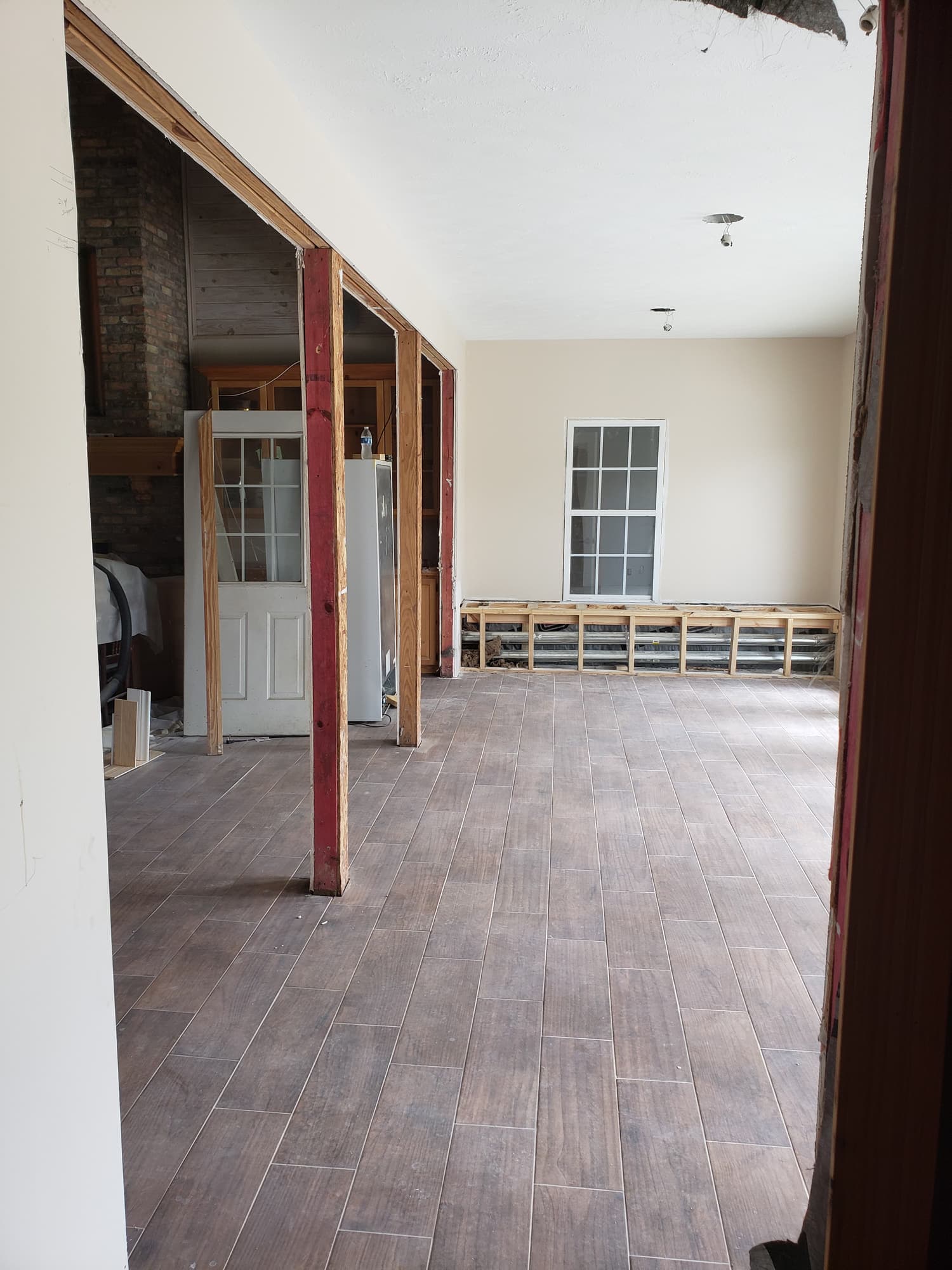
A newly framed structural header spanning a widened opening above a wood-look porcelain tile floor
New header framed and wood-look porcelain plank running through. Plank tile this long needs a substrate flatter than most slabs in this area start out.

The housing stock runs from the old town site out to subdivisions still being finished, and the work changes with it. Sugar Creek and the older First Colony sections date to the late 1970s and early 80s: a kitchen closed off from the family room, a bulkhead soffit over the wall cabinets, honey oak doors, and drain lines under the slab that are cast iron in the earliest of those houses. Telfair, Riverstone and the later New Territory phases are newer and already open, so the work there is mostly finishes, and it sits on post-tension slabs, which changes how you approach an island drain or a relocated shower.

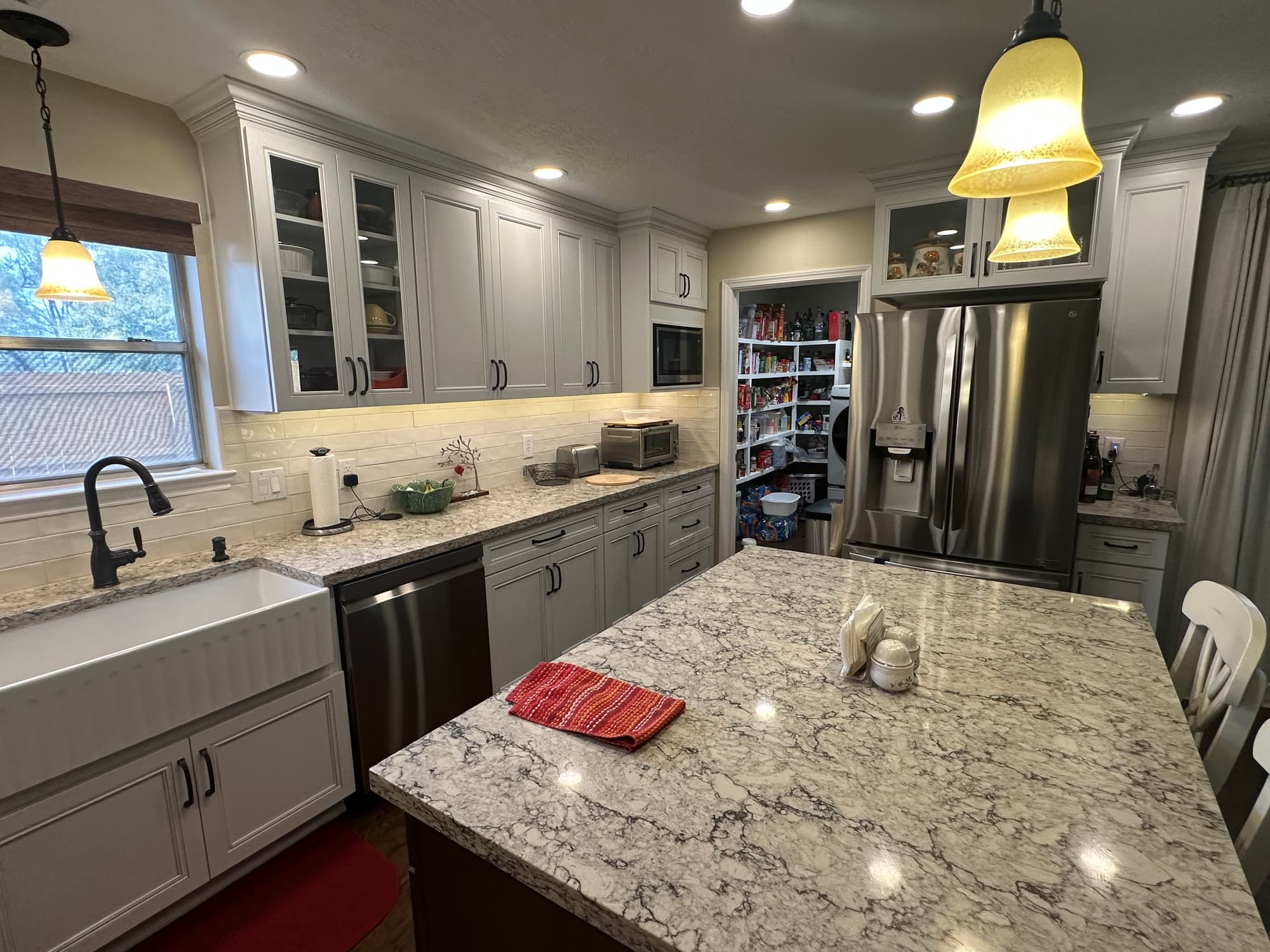
Finished kitchen remodel with a quartz-topped island, painted shaker cabinets, a farmhouse apron sink and a cream subway tile backsplash
Base cabinets set level off the high point of the floor and shimmed down from there, so the counter sits flat even where the slab is not.

On the ground

What is different about building in Sugar Land

Soil, drainage, the era the houses went up in and who reviews the plans. These are the things that actually change the job here.

Expansive clay over old cane and rice ground

Much of Sugar Land was farmland that got graded, ditched and filled before the subdivisions went in, so fill depth can change across a single lot where an old field ditch was backfilled. On top of that sits some of the most active shrink-swell clay in greater Houston. The movement is seasonal, not one-time: the slab edge lifts and drops as the perimeter soil takes on and loses water. On old cane and rice ground the giveaway is that the movement is not uniform across the lot: a house sitting half on original prairie and half on a backfilled field ditch will drop on one end only, which is why a floor elevation reading across the whole slab tells you more here than any single crack does.

Post-tension slabs in the newer neighborhoods

The newer communities on the south and west sides went up in the era of post-tension foundations. Those cables are under load and cannot be cut or cored blind. Anything that passes through the floor, an island drain, a relocated shower riser, a new toilet flange, even anchors for a stair newel, starts with locating and marking tendons. Sugar Creek and the early First Colony slabs are usually conventionally reinforced, which leaves more room to work, but it does not make them any flatter.

Brazos levees, Oyster Creek and slow drainage

Oyster Creek runs through the middle of the city and the Brazos wraps the west and south side. Parts of Sugar Land near the river sit behind levees maintained by levee improvement districts, and the Brazos set modern record crests in 2016 and again during Harvey in 2017. The ground is flat and drains slowly. Anything that adds hard surface, a patio slab, a covered patio, a room addition, is worth checking against drainage and floodplain rules while it is still on paper.

What the 1970s and 80s building era left in the house

In Sugar Creek, Sweetwater, the Commonwealth and the first First Colony sections you find formal plans: kitchen walled off from the family room, a soffit hiding ductwork or nothing at all, wet bars, carpet over slab, and 12 by 12 tile from a later update. In the Sugar Creek and Sweetwater houses the layer that matters is usually not the top one: a 12 by 12 tile update from the 1990s often sits directly over the original resilient floor and its mastic, so the sample is cored through both layers rather than taken off the surface, and that is worth doing before a demolition date is set.

Architectural review runs alongside the city permit

Sugar Land regulates development through its own city code, and nearly every neighborhood also has an association with architectural control: First Colony, Sugar Creek, Greatwood, New Territory, Telfair, Riverstone. Exterior work, a covered patio, a roof line, window replacement, a color change on a street-facing elevation, usually needs association approval as well as a permit, and the two reviews are separate. Some areas are still served by municipal utility districts, and levee and drainage districts operate across parts of the city, so the district that governs a given lot is worth confirming by address rather than assumed from the neighborhood name.

Slab moisture in a humid climate

Slab-on-grade gives off moisture year round here, and older Sugar Land slabs were often poured without a vapor retarder beneath them. Anchor it to the local variable already named on this page: slabs poured over graded and backfilled cane and rice ground without a vapour retarder, and what the probe readings on those particular older Sugar Creek and First Colony slabs tend to come back at compared with a Telfair slab poured thirty years later. Skipping that step is why a floor cups or telegraphs a year later.

Permits

City of Sugar Land building permit office, for addresses inside the city limits

Sugar Land is incorporated and runs its own permitting and inspections. Structural changes such as removing a bearing wall, framing a new header, enlarging a window or door opening, or adding a covered patio or a room are permitted and inspected work, and so are electrical, plumbing and mechanical changes, with those trade permits pulled by the electrician or plumber doing that portion of the work. Straight cosmetic work, paint, cabinets in the same layout, flooring over an existing floor, generally is not. The line worth knowing in Sugar Land is a recent one: Greatwood and New Territory were annexed in December 2017, so houses there changed permitting office within living memory of their current owners and older paperwork in the file may reference the county rather than the city. Greatwood and New Territory were annexed in December 2017 and now permit through the city, other addresses with Sugar Land mail sit in Missouri City or in unincorporated Fort Bend County, so the jurisdiction has to be confirmed by address before anything is scheduled. Property inside a levee or drainage district may also draw a drainage or floodplain review for anything that adds impervious cover. Confirm the scope and the jurisdiction for your specific address with the authority having jurisdiction before work is scheduled, and treat HOA architectural approval as a separate step that a permit does not replace.

Requirements change and vary by address. Always confirm with the authority having jurisdiction over your own property before work starts, and check your deed restrictions and any HOA architectural rules separately — those are a different approval and often the slower one.

Most requested here

What Sugar Land homeowners call about

Every service

Questions

Working in Sugar Land

A crack keeps coming back in the same line across my kitchen tile. Is that bad tile work?

Usually not. A crack that runs a straight line across the room, through grout and sometimes through the tile body, is normally the slab moving underneath or a control joint telegraphing up. Regrouting will not hold it. The order of operations is to find out what the floor is doing, then set the replacement over an uncoupling or crack isolation membrane with soft movement joints at the walls so the assembly has somewhere to go.

Should I have the foundation looked at before new floors or a kitchen?

If doors bind throughout the house, tile is cracking in lines, or the floor drops noticeably from one room to the next, get a floor elevation survey and have a structural or foundation engineer read it before finishes are ordered, rather than relying on a repair company's free inspection. On a forty year old slab in the older sections of town that is worth doing before cabinets are ordered, not after they are set. If the slab needs work it is far cheaper to do it before cabinets and tile go in than to lift them later. If the elevations are within reason and stable, the answer is often to level the finishes and leave the slab alone.

Do I need a permit to remodel in Sugar Land?

For structural, electrical, plumbing or mechanical work inside the city limits, yes, through the city's building division, with inspections to follow. First confirm your address is actually in the city: Greatwood and New Territory came in during December 2017, and some addresses with Sugar Land mail sit in Missouri City or in unincorporated Fort Bend County. Your association's architectural review is a separate approval and does not stand in for the permit.

Can I put a sink in the island in a Telfair or Riverstone kitchen?

Often yes, but those slabs are post-tension. Drain and supply have to pass through the floor, so tendons get located and marked first and the island is positioned around what is found, not the other way around. Where coring does not make sense, the layout adapts: a prep island with no plumbing, or the sink staying on the line that is already there.

Why do my doors stick every August and open fine by spring?

That is the clay. It shrinks back from the slab edge through a dry summer and swells again when the rain returns, and the house moves a fraction with it. For finish work the useful number is the door reveal rather than the crack: measure the gap at the top corner of two or three doors in March and again in September, and the difference tells you whether this is a hinge and strike-plate adjustment or a conversation to have with an engineer before cabinets are ordered. For finish work it means measuring the floor with the season in mind and adjusting hinges and strike plates rather than planing a door down every year until it no longer fits when the ground comes back up.

Get an estimate in Sugar Land

Best for a same-day answer

Or call (281) 883-9927 Monday – Friday, 8:00 AM – 5:00 PM.

Free estimates

Remodeling in Sugar Land?

Call and talk to someone who has been doing this for 15+ years. We will look at the space, tell you what the work actually involves, and put a number on it — at no cost.

(281) 883-9927Request a free estimate

Monday – Friday, 8:00 AM – 5:00 PM
Emergencies answered 24/7

Call nowFree estimate